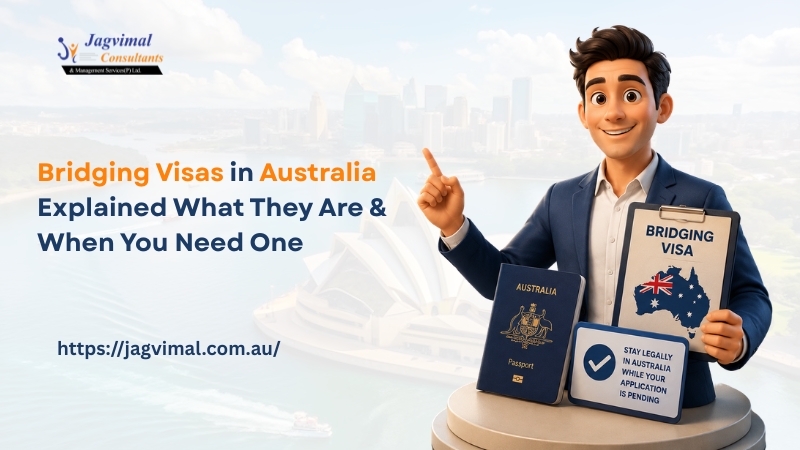
Visa deadlines are always a dangerous trouble that creates a panic situation for most of the migrants. One day, everything feels out of stress and the next you are checking expiry dates, paperwork and immigration rules while trying not to panic. For many migrants, students, workers and visitors in Australia, that in-between period when one visa ends but another is still in process can feel uncertain and stressful. That is exactly where bridging visas come in.
They act as a legal safety net which allows you to stay in Australia while immigration authorities assess your next visa application. But not all bridging visas in Australia have the same process or rights. Some allow work, some restrict travel and others come with strict conditions. Making yourself informed about how they work can save you from costly mistakes and unnecessary stress.
Bridging Visas in Australia are temporary visas issued by the Australian Government to allow non citizens to stay lawfully in the country while their immigration status is under process of validation. In simple terms, a bridging visa fills the gap between your current visa and the outcome of another visa application, appeal or immigration matter. An Australia Bridging Visa does not replace a permanent visa. Instead, it serves as temporary legal permission to remain in the country. Bridging visas are commonly issued when:
Without a bridging visa, staying in Australia after your visa expires can make you unlawful, which may lead to detention, removal, or restrictions on future visa applications. That is why understanding Bridging Visa Australia Explained matters.
Australia has one of the world’s best immigration systems that comes with a good structure. Visa processing can take weeks, months or sometimes years based on visa category and application complexity. During this waiting period, applicants still need legal status. Bridging visas exist to ensure people are not unfairly forced to leave Australia while their valid applications or legal reviews are underway. They protect both:
Applicants - by giving a temporary lawful stay
Government systems - by maintaining immigration compliance
This system helps prevent administrative gaps where someone might unintentionally become unlawful.
You usually need a bridging visa when your existing visa will expire before a decision is made on another application. Here are common scenarios.
This is the most common reason. Example: A student visa holder applies for a skilled migration visa before their student visa expires. Because the skilled visa may take months, a bridging visa keeps them lawful after the student visa ends.
If your visa application is refused but you seek review through the Administrative Review Tribunal, you may need a bridging visa during the appeal. This ensures you can remain in Australia legally while the appeal is processed.
Sometimes people accidentally overstay. Reasons may include:
In such cases, certain bridging visas may restore lawful status.
If you must depart but need time to organise flights, finances, or personal matters, a bridging visa may provide a temporary lawful stay.
Knowing the Types of bridging visas in Australia is necessary because each visa serves a different purpose. Australia generally offers five major bridging visas.
Bridging Visa A is the most common bridging visa. It is usually granted when someone applies for a new substantive visa while holding a valid visa. Key features:
This last point is critical. Many people assume they can travel overseas and return on BVA. That is incorrect. Once you leave Australia while holding only a BVA, that visa usually ceases.
Bridging Visa B is similar to BVA but includes travel permission. If you need to travel internationally while waiting for a visa decision, BVB may be necessary.
Key features:
Example: You applied for a partner visa and need to visit family overseas. BVB may allow travel without affecting lawful re-entry. Travel validity periods vary, so planning matters.
Bridging Visa C is for people who apply for a substantive visa while not holding a substantive visa. In simpler terms, you applied after already becoming unlawful or while on certain limited visas.
Key features:
Because BVC applicants often have more complicated immigration histories, extra restrictions can apply.
Bridging Visa D is short term and is usually given in urgent situations. It helps individuals who:
This visa typically lasts only a few days. It acts as emergency protection while next steps are set.
A bridging visa is usually connected with complex immigration situations. It may apply to people who:
BVE conditions can be strict. Depending on the case, work rights may be limited or unavailable. Because of its complexity, taking professional migration advice is usually valuable.
This confuses many applicants. A bridging visa is usually given on the basis of immediate. Usually:
Example:
Your student visa expires on 30 November and you get your BVA in July. You still remain on student visa conditions until 30 November. On 1 December, your bridging visa begins.
This timing matters because visa conditions can change once activation happens.
Knowing the Bridging visa conditions in Australia is among the most important parts of staying respectful. Each bridging visa may carry conditions related to:
Some bridging visas allow work without any restrictions and on the other hand some completely restrict or prohibit work in the country. Work conditions can depend on:
Working without permission can cause serious visa issues.
Many bridging visa holders can study without any issue. However, tuition assistance or domestic fee access usually does not apply. International fee structures may still apply.
This is one of the most misunderstood areas. Not all bridging visas allow travel.
Generally:
Always confirm travel rights before booking flights.
Some visas require you to report to immigration authorities regularly. Missing needed check-ins can cause adherence problems.
This is based entirely on your visa conditions. Some applicants automatically get the work rights and others do not. If your bridging visa does not have work rights and you face financial hardship, you may apply for them. Evidence may include:
Immigration authorities assess each case individually.
A bridging visa usually ends when one of these happens:
If it ends and no other visa applies, you may become unlawful.
That creates serious risks, including:
Always monitor visa status carefully.
A bridging visa itself does not lead directly to permanent residency. It is not a migration pathway but it supports you while waiting for the outcome of another visa that may lead to PR. Here are some examples of visas that may lead to PR:
Think of a bridging visa as a temporary bridge, not the destination.
Even a minor misunderstanding can cause major immigration problems. A few common mistakes include:
Each visa has different rights and conditions.
Never rely on general assumptions.
Leaving Australia on the wrong bridging visa can create re-entry issues.
This mistake happens often.
Unauthorized work can affect current and future visa applications.
Always verify employment rights.
People often focus only on substantive visas and ignore bridging conditions.
Regular checks help avoid accidental breaches.
There is no universal answer for this. Some people remain on a bridging visa for weeks. Others remain for years while waiting for a complex visa decision or appeal. Processing duration depends on:
Recent migration data shows some permanent visa categories can take several months to over a year for processing which explains why bridging visas are crucial for many applicants.
In many cases, you do not need a separate application. A bridging visa may be automatically granted when you lodge a valid visa application. However, some visas, especially BVB or BVE many need a separate application. General requirements include:
Accuracy matters in every scenario. Errors can cause delays or refusals.
Making yourself informed about the bridging visas Australia can save you from multiple situations during stressful immigration transitions. These temporary visas help make sure you stay lawful while waiting for a visa decision, appeal or departure arrangement. But every bridging visa comes with special conditions especially around work and travel. Knowing what Types of Bridging Visas Australia offers and understanding Bridging Visa Conditions Australia can help you save yourself from unnecessary hardships.
If your case feels complex, seeking professional migration guidance from experts such as Jagvimal Consultants can help you better understand your options and obligations.
Q. Is a bridging visa automatically granted in Australia?
In many cases, yes. If you apply for a new substantive visa while holding a valid visa, a bridging visa is usually given to you automatically.
Q. Can I leave Australia on a bridging visa?
Not always, most bridging visas do not allow travel. If you need to travel, you may need a Bridging Visa B.
Q. Can I work while on a bridging visa?
It is based on your visa conditions. Some bridging visas permit work while others restrict or prohibit it.
Q. How long does a bridging visa last?
A bridging visa lasts until a triggering immigration event occurs, such as visa grant, refusal, departure or cancellation.
Q. Can I apply for permanent residency while on a bridging visa?
A bridging visa itself does not give you PR but you may receive PR if the visa application you are waiting on has got the approval.









.png)










.png)

.jpg)
.png)

.png)
 (1).png)
.jpg)